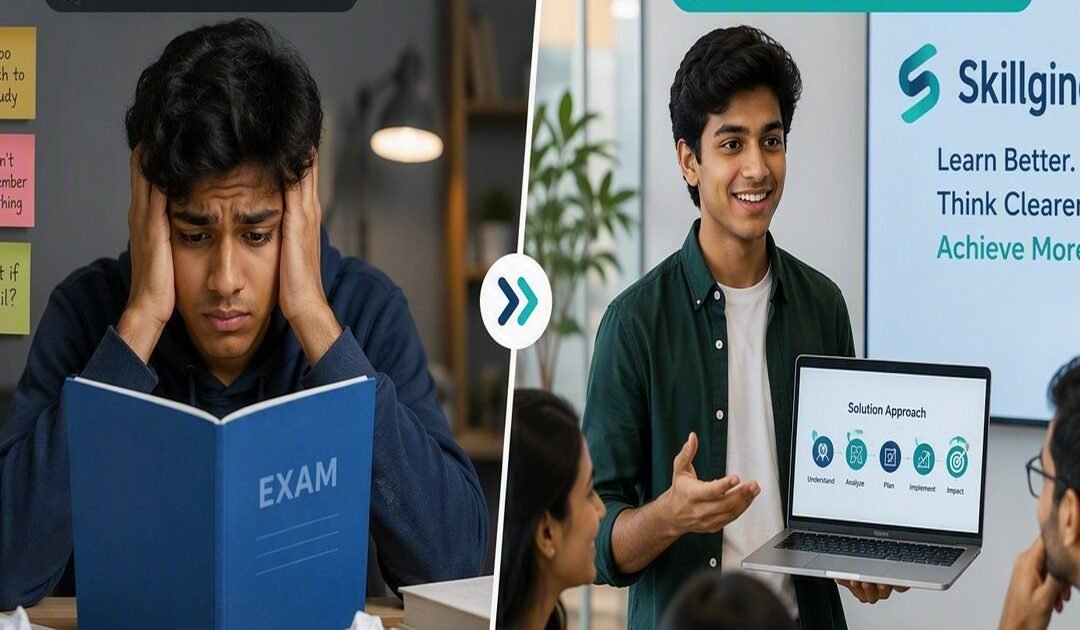
A Harvard research fellow just said something that should wake up every college, employer, and business owner in North America:
"What we're doing is preparing human beings to lose to AI — instead of preparing them with skills that complement AI." — Christopher Dede, Harvard Senior Research Fellow
Ouch. But he's right. And the same lesson applies to your business.
The Big Mistake: Fighting the Wrong Battle
Right now, most universities are asking one question: "How do we stop students from cheating with AI?"
Wrong question.
Professors are going back to paper exams and blue books. Harvard research says this "misses the point entirely." Why? Because banning AI doesn't prepare students for a world that already runs on it.
The reality check:
- 85% of college students already use AI at least every two weeks.
- Over half use it to write assignments.
- 70%+ of employers say they'd rather hire someone with less experience who understands AI than someone with more experience who doesn't.
The message is clear: AI isn't the enemy. Not knowing how to use it is.
Reckoning vs. Judgment: The Skill That Actually Matters
Here's the key idea. Harvard borrows two words to explain it:
Reckoning = fast calculation and prediction. Machines are amazing at this. So are standardized tests like the SAT and GRE. But guess what? So is AI.
Judgment = the human stuff. Weighing right and wrong. Reading context. Understanding people, pain, and quality of life. AI is terrible at this.
If schools only train students to "reckon," they're training them to compete with a machine that will always win. The future belongs to people who can judge — and use AI to handle the reckoning.
"Doing Things Better" vs. "Doing Better Things"
Most schools use AI to do old things faster — grade quizzes, auto-generate lectures. That's "doing things better."
The real win is "doing better things":
- Project-based learning where students solve real problems.
- Immersive simulations — imagine AI role-playing your tough boss, a used-car dealer, or a difficult client, so students can practise negotiation before the real thing.
- Collaboration that AI can't fake.
This is how you build judgment. Not by memorizing — by doing.
The 200-Applications Warning
Here's a story that says it all. A hiring manager posted one internship. She got 200 applications — nearly all identical, because students let AI write them.
She cut the AI-written ones first.
The lesson? When everyone uses the same tool the same lazy way, the people who stand out are the ones who add human judgment on top. That's the skill worth teaching.
Why This Matters Beyond the Classroom
Here's the part business owners can't ignore: your company has the exact same problem.
Buying Microsoft Copilot licences handles the "reckoning." But your team still needs judgment — knowing when to trust the output, spotting AI "hallucinations," and building AI into real workflows instead of just typing prompts.
Microsoft reported 10 million Copilot users in a single quarter. Adoption is exploding. But tools without training just create expensive confusion. The winners aren't the ones with AI — they're the ones who know how to use it well.
The Bottom Line
Higher education is at a crossroads — and so is your business. You can:
- Ban and fear AI (and fall behind), or
- Teach judgment and use AI to do better things (and win).
Harvard's prediction? "A lot of universities will change in order to survive." The same is true for businesses.
The question isn't if you adopt AI. It's whether your people know how to use it well.

Skillgine provides Microsoft Copilot training and implementation services to businesses across Canada and the United States. We help organizations assess AI readiness, train employees, design practical workflows, develop Copilot agents, connect business applications and support long-term Copilot adoption.
COPILOT TRAINING
Copilot Training for Businesses
Copilot Training for Solopreneurs
Copilot Training for Office Professionals
Copilot Training for Non-Profits
Startup Bootcamps
Role-Based Copilot Training (Coming Soon)
Train-the-Trainer Programme (Coming Soon)
READINESS & ADOPTION
Who We Help
Small and Mid-Sized Businesses
Office Professionals
Consultants and Trainers
Non-Profit Organizations
Associations and Member Groups
Colleges and Training Providers
Startups
Sales and Customer Service Teams (Coming Soon)
Executives and Managers ( Coming Soon)
HR Managers ( Coming Soon)
Programmes & Resources
COMMUNITY
Microsoft Copilot Blog
Skillgine Copilot User Group
Copilot Adoption Academy
Skillgine Newsletter
Frequently Asked Questions (F.A.Q)
What Does Skillgine Do?
Skillgine helps organizations implement and adopt Microsoft Copilot. Services include Copilot readiness assessments, practical employee training, workflow design, Copilot implementation, custom Copilot agents, Copilot Studio solutions, MCP setup, Zoho CRM integration and ongoing adoption support.
Does Skillgine Provide Microsoft Copilot Training?
Yes. Skillgine provides practical Microsoft Copilot training for businesses, managers, office professionals, consultants, non-profits and other organizations. Training focuses on using Copilot in daily work across Microsoft 365.
Does Skillgine Integrate Copilot with Business Applications?
Yes. Skillgine provides Copilot integration services for supported business applications, including Zoho CRM. Services can include readiness review, workflow design, agent configuration, permission planning, employee training and adoption support.
What Is Skillgine’s MCP Setup Service?
Skillgine helps organizations plan and configure approved connections between AI agents and selected business systems using Model Context Protocol. The engagement can include business-workflow review, authentication requirements, access permissions, supported actions, approval requirements and user adoption.
Where Does Skillgine Provide Services?
Skillgine provides virtual Microsoft Copilot training, readiness, implementation and integration services to organizations across Canada and the United States.
Speak with a Copilot Specialist
- 1-844-904-8943
- Email Us
- Canada & USA
STAY CURRENT WITH COPILOT


By subscribing, you agree to receive Skillgine news, training updates and event information. You may unsubscribe at any time.

Copyright © 2026 skillgine | Privacy | Terms | Sitemaps | Accessibility | Refund Policy | Partner Terms | AI Ethical Use Policy
Microsoft, Microsoft 365, Microsoft Copilot and related product names are trademarks of the Microsoft group of companies. Skillgine is an independent training, implementation and adoption services provider unless otherwise stated.